
Pakistan plans to change the territorial status of Gilgit-Baltistan.
The de-facto annexation of these areas of Jammu and Kashmir by Pakistan will violate UN Security Council Resolutions.
Introduction
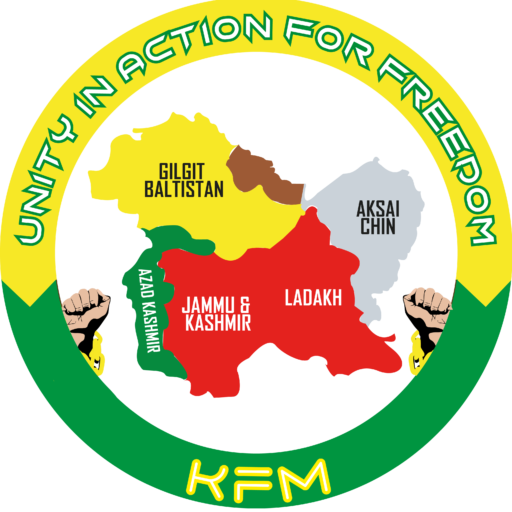
The State of Jammu & Kashmir, which includes Kashmir Valley, Ladakh, Jammu, Azad Jammu Kashmir, and Gilgit-Baltistan, is a single sovereign geographic entity and a disputed territory under international law.
Gilgit-Baltistan has been under the direct control and administration of the Government of Pakistan since 1949. Recently, following the example of India’s ruling party (BJP), Pakistan’s Baluchistan Awami Party (BAP)—an ally of Tehreek-e-Insaaf—introduced a bill in the Senate of Pakistan on February 28, 2022, to amend Article 1 of the Constitution of Pakistan, effectively annexing Gilgit-Baltistan as a pseudo-provisional province.
If this bill moves forward, it will mirror India’s actions on August 5, 2019, when Jammu and Kashmir were placed under direct control and declared a Union Territory of India. This unilateral decision by Pakistan would be a “material change in the situation” and a violation of UN Security Council Resolution [S/651] 38 (1948).
The move would breach UN Security Council Resolutions on Jammu and Kashmir and fail Pakistan’s obligations under the UN mechanism concerning Gilgit-Baltistan and Azad Jammu & Kashmir (AJK).
Concerns of the People of Gilgit-Baltistan and AJK
The political leadership of Gilgit-Baltistan and AJK has rejected this move, viewing it as an attempt by Pakistan to impose colonial control over the region. The Kashmir Freedom Movement (KFM) and the people of Jammu & Kashmir strongly oppose Pakistan’s actions.
Pakistan’s Constitution (Amendment) Act 2022 undermines its UN obligations and governance responsibilities toward Gilgit-Baltistan and AJK. Granting “rights” in exchange for annexation is seen as a failure to uphold its trust obligations.
The KFM believes Pakistan is taking these steps to protect Chinese corporate interests, aligning with India’s 2019 moves in Jammu and Kashmir. The objective is to permanently implement Article 6 of the China-Pakistan Agreement (1963), concerning the boundary between China’s Xinjiang and Pakistan-controlled areas.
Additionally, the Karachi Agreement (1949) imposed oppressive governance on Gilgit-Baltistan, reinforcing a colonial system. Human rights violations in Gilgit-Baltistan and AJK are well-documented by:
- UN Human Rights Commissioner Reports (2018 & 2019)
- EU Committee on Foreign Affairs Report (2007)
Pakistan must rethink its policies regarding Gilgit-Baltistan and AJK.
Way Forward & Key Demands
The people of Gilgit-Baltistan and AJK demand democratic, decentralized governance and internal sovereignty until a UN-mandated plebiscite determines the future of Jammu and Kashmir.
To show its commitment, Pakistan must:
- Respect and implement UN mechanisms within Gilgit-Baltistan and AJK as per UN Security Council resolutions.
- Restore Jammu & Kashmir State Subject Rules (1927) in Gilgit-Baltistan and halt demographic changes.
- Engage in dialogue with all political and civil society leaders in Gilgit-Baltistan and AJK to create decentralized governance systems.
- Ensure equitable relations between Pakistan and the local governments in AJK and Gilgit-Baltistan.
- Grant full representation to Gilgit-Baltistan and AJK in China-Pakistan Economic Corridor (CPEC) discussions.
- Prioritize the completion of the Muzaffarabad–Neelum–Astore Road in the CPEC project and reopen routes like Ashkoman to Tajikistan & Skardu to Kargil.
- Expand & modernize airports in Mirpur, Gilgit, Muzaffarabad, and Rawalakot for international flights to boost tourism.
- Upgrade highways (e.g., Mirpur-Poonch-Muzaffarabad) to unlock economic potential.
- Declare Gilgit-Baltistan & AJK a tax-free zone to promote direct international trade and investment.
- Release all political prisoners in Gilgit-Baltistan and allow free movement for political activists supporting Kashmir’s reunification and liberation.